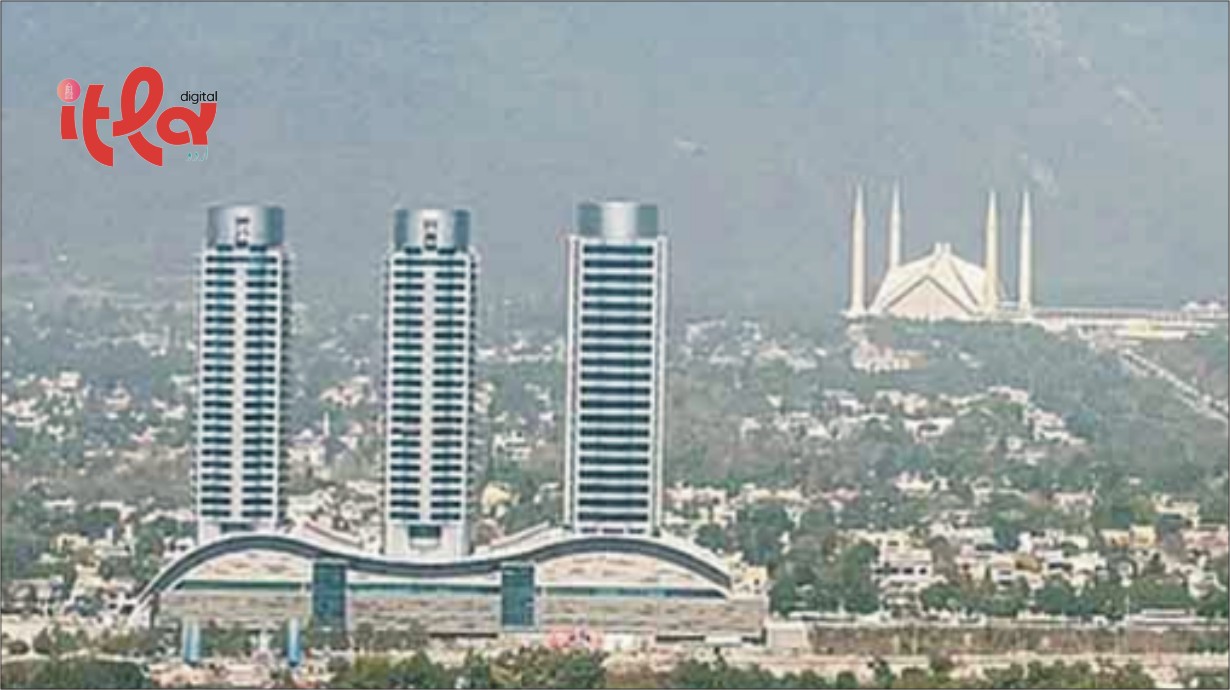
Proposal to Establish Elected Government in Federal Capital; Chief Minister or Mayor to Head 27-Member Assembly
06 June 2026
(Digital Itla) The government has prepared a comprehensive reform plan for the governance system of the Islamabad Capital Territory (ICT). This includes the establishment of an elected regional government, eliminating institutional disintegration, and transitioning toward an integrated "Smart City" model to improve service delivery and long-term urban planning in the federal capital.
The 138-page report, titled "ICT Governance Model," was drafted by a high-level committee led by Planning Commission Minister Ahsan Iqbal. This comes amidst concerns that Islamabad has transformed from a planned administrative capital into a mega-city with a population exceeding 2.4 million, while institutional development failed to match this pace. The report has been presented to Prime Minister Shehbaz Sharif. The core point of the proposal is the establishment of a representative Islamabad Capital Territory Government (ICTG), which will enjoy administrative and financial autonomy equivalent to provincial governments while maintaining Islamabad's federal status. Under the proposed structure, a 27-member Islamabad Capital Territory Assembly will be established, featuring 21 directly elected members, five seats reserved for women, and one for minorities. This assembly will elect its leader, who may be designated as Chief Minister or Mayor, subject to the federal government's final decision.
According to the plan, all powers except law and order and master planning will be delegated to the ICT government, while these two domains will remain with the federation due to the capital's status. Concurrently, administrative responsibilities currently under federal ministries and institutions, including the CDA, will be transferred to the ICT government to eliminate duplication of power and institutional conflict. The report recommends establishing multiple committees for execution: a legislative committee to draft laws, and a transition committee to oversee the phased transfer of powers and administrative continuity. A key feature of this plan is the "Islamabad Smart City Model," aimed at adapting the capital into a modern, eco-friendly environment. According to the report, the "Destination Islamabad" strategy could boost tourism, create jobs, and improve private investment and local revenue. This reform agenda aligns with national policies such as "Uraan Pakistan," the Digital Pakistan Policy, the National Urban Policy Framework, and Sustainable Development Goals. If implemented, this plan will fundamentally change the governance framework of the federal capital, presenting Islamabad as a modern, efficient, and digital governance model.
Categories
Latest Posts