Scotland’s Greenock Turns to Migrants as Population Decline Threatens Its Future
GREENOCK, Scotland — Aug. 27, 2026
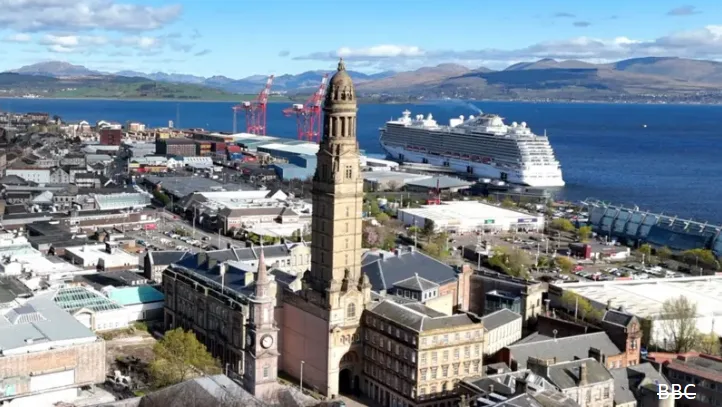
A Scottish coastal town struggling with population decline, an ageing workforce and a shrinking economy is looking to migrants and refugees to help reverse years of demographic decline.
In Greenock, part of the Inverclyde council area in western Scotland, new African food shops are appearing along increasingly quiet high streets, reflecting a growing migrant population in a town where residents say seeing a Black person was unusual just a few years ago.
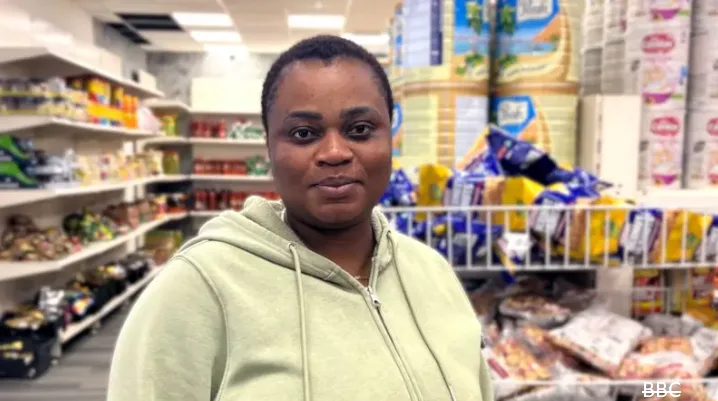
One of the newest businesses is Ank African Store, which sells Nigerian and other African foods including yams, plantains, okra and catfish.
Owner Christiana Omelana, who moved to Britain in 2021, said migrants would continue to come if employment opportunities were available.
“Scottish people are very nice and accepting,” she said. “When there are jobs, migrants will come.”
Population has fallen sharply
Inverclyde has experienced one of Scotland’s most significant population declines.
The area’s population has fallen by about 22,000 since 1981 to around 78,000, with projections suggesting it could decline by a further 16% over the next two decades.
The local council is pursuing a strategy aimed at both encouraging existing residents to remain and attracting new residents from elsewhere, including legal migrants and refugees.
Council leaders believe that reversing the demographic decline is essential to maintaining schools, public services, housing and the local economy.
Jobs remain the biggest challenge
The town’s biggest obstacle is a lack of employment.
Greenock once had a thriving industrial economy. It was an important centre of the sugar-refining industry in the 19th century and had a shipbuilding tradition stretching back almost 300 years.
But many of those industries have disappeared.
IBM once employed more than 5,000 people at a site near Greenock before the operation closed completely in 2016. A further 1,500 jobs have been lost in the wider area over the past four years, while other major employers have relocated.
The decline has left parts of the town centre struggling, with residents describing the high street as increasingly empty.
Migrants helping fill labour shortages
Despite the lack of employment in some sectors, migrants have found work in areas where labour is needed, particularly healthcare and social care.
Many African migrants living in Greenock commute to Glasgow or Paisley for work and education, while choosing Greenock because of comparatively affordable housing.
Inverclyde Council wants more of these workers to settle permanently in the area.
Council leader Stephen McCabe said migrants had already helped stabilise the population and played an important role in the local economy.
“Without these people, our health services would really struggle,” he said, adding that migrants who can work are welcome in the area.
Refugees face different barriers
For asylum seekers, however, finding work can be considerably more difficult because many are not permitted to work while waiting for decisions on their claims.
Jonathan Fleming, a Church of Scotland minister in Greenock, said some refugees were eager to work and become financially independent but were unable to find employment.
“They want to contribute to the community,” he said. “They want to stop relying on financial support and become independent, but they cannot.”
The council provides English-language classes and assistance with accessing employment and training for newcomers.
Residents question whether migration alone can solve the problem
Not everyone is convinced that attracting more people will solve Greenock’s problems.
Some local residents argue that the town needs more jobs, businesses and services before it can successfully accommodate a larger population.
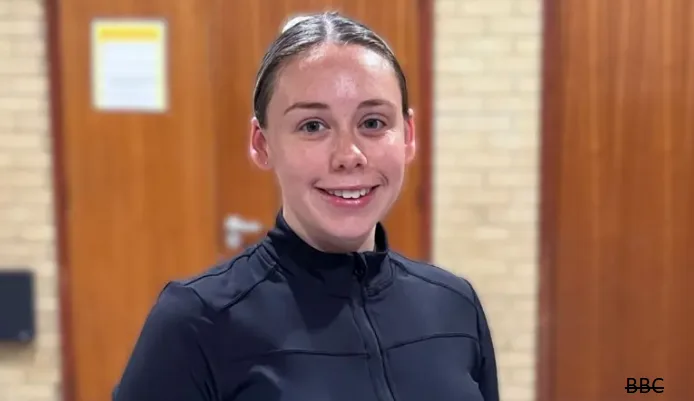
Tiffany, a 29-year-old resident who previously left Greenock for work before returning to raise her child, said finding suitable employment remained difficult.
“It has become a deserted town,” she said. “There is nothing here. There is nothing to do, fewer shops and not enough jobs.”
Some residents also question where newly arrived migrants would work if existing residents are already struggling to find employment.
Glasgow offers another option
Other residents believe Greenock should take advantage of its proximity to Glasgow rather than trying to recreate the industrial economy of the past.
Glasgow is about 40 minutes away, making Greenock a potential commuter town for people who work in Scotland’s largest city.
Matthew Quinn, a former member of the Scottish Youth Parliament, said the council should focus more on housing, transport and public services than on creating large numbers of local jobs.
“If we accept that the jobs are in Glasgow, then we should focus on public services and creating a good place for people to live,” he said.
New investment aims to revive the town
Local campaigners are also trying to develop new economic opportunities.
Derek Mitchell, a community campaigner, wants to transform a former sugar refinery site into a centre focused on science, technology, engineering, arts and mathematics.
The project could require around £5 million in investment.
Mitchell said giving young people a reason to remain in the area could help reverse the long-term population decline.
“If you give people a sense of belonging to their area, naturally they won't want to leave,” he said.
Immigration remains politically sensitive
Greenock's approach comes at a time when immigration remains a contentious issue across Britain.
The area has experienced some tensions involving asylum seekers, including protests outside a hotel housing people seeking asylum. Police officers were injured during unrest in June.
Despite this, Reform UK, which campaigns for tighter immigration controls, finished third in Inverclyde in Scotland’s recent parliamentary elections.
An ageing population adds pressure
Greenock is not only losing residents but also getting older.
Fewer children are contributing to school and nursery closures, while an ageing population requires greater healthcare and social support.
At the same time, high levels of poverty are putting additional pressure on public services as the number of taxpayers falls. Local council tax increased by about 8% this year.
For the council, attracting working-age migrants is therefore seen as one part of a wider strategy to maintain the population and strengthen the local economy.
A challenge facing other parts of Britain
Inverclyde’s experience could offer lessons for other parts of Britain facing demographic decline.
Population growth in the area has stabilised in recent years, largely because of migration, according to council officials.
But Greenock's future may depend on more than simply attracting new residents. Affordable housing, employment, transport, public services and investment will determine whether newcomers stay permanently and help rebuild the town.
For a community once defined by shipbuilding and heavy industry, Greenock is now attempting a very different economic experiment: using migration to help build a new future for a town whose population has been shrinking for decades.
Latest Posts